
Why Cell Assembly and Electrolyte Filling Need a Turnkey Low Dew Point Dry Room Solution Provider Like Dryair
News originally published by
EIN Presswire
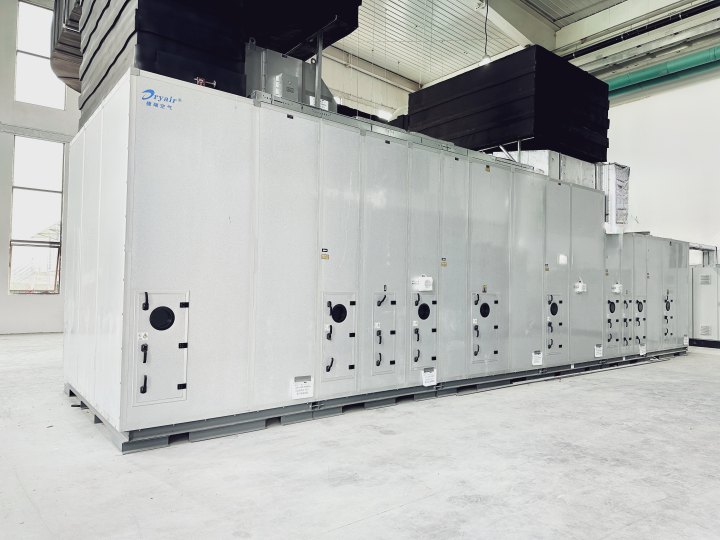
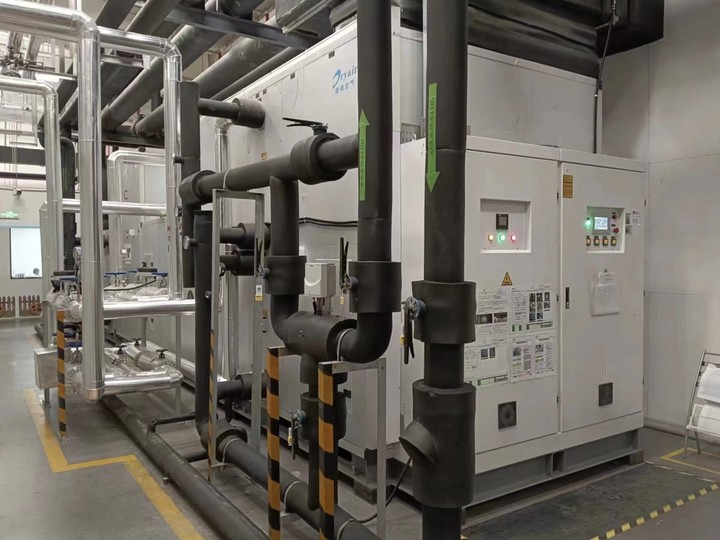
HANGZHOU, ZHEJIANG, CHINA, November 27, 2026 /EINPresswire.com/ -- In lithium-ion battery manufacturing, cell assembly and electrolyte filling represent the most moisture-critical phases of production. Because unsealed battery materials and non-aqueous electrolytes react destructively with ambient water vapor, maintaining an ultra-dry operating environment is essential for cell safety, electrochemical performance, and manufacturing yield. Partnering with an established Turnkey Low Dew Point Dry Room Solution Provider like Dryair allows battery manufacturers to integrate specialized desiccant dehumidification machinery with airtight room-envelope construction, downward air distribution, sensible cooling, and centralized automation under single-source accountability.
Why Are Cell Assembly and Electrolyte Filling Treated as Dry-Room Processes?
In lithium-ion battery manufacturing, the critical moisture threshold for cell assembly and electrolyte filling is defined as a room dew point of Td ≤ -40°C. Above this moisture level, electrolyte salts hydrolyze within seconds, generating corrosive hydrofluoric acid (HF) that attacks the solid electrolyte interphase (SEI) layer.
During the early stages of lithium-ion battery manufacturing, active cathode and anode materials are coated, dried, and calendered. However, during cell assembly-which includes electrode slitting, winding or stacking, tab welding, and insertion into the cell casing-the electrochemical components are directly exposed to the surrounding atmosphere. If ambient moisture contacts the electrodes, it initiates chemical degradation, increases internal cell resistance, and impairs long-term cycle life.
The vulnerability reaches its peak during electrolyte filling (injection). Common lithium battery electrolytes utilize lithium hexafluorophosphate (LiPF6) dissolved in organic carbonate solvents. When exposed to airborne moisture, LiPF6 hydrolyzes rapidly according to the reaction: LiPF6 + H2O yields LiF + POF3 + 2HF.
Hydrofluoric acid corrodes current collectors, dissolves cathode transition metals, and damages the solid electrolyte interphase (SEI) layer, which can trigger micro-short circuits, faster capacity fade, and thermal runaway risks. To prevent this reaction, established lithium-ion battery industry convention places cell assembly and electrolyte filling in a low dew point dry room. Drawing on ISMI guidelines and long-standing operating experience at major cell manufacturers, plants typically maintain this environment at a dew point of -40°C or lower.
Why Is Dehumidifier Outlet Dew Point Not Enough?
A common pitfall in battery plant design is assuming that procuring a dehumidifier with a catalog rating of -50°C or -60°C supply dew point automatically guarantees compliant conditions inside the production room. An equipment rating plate reflects performance at the machine's discharge flange under controlled test conditions; it does not account for the complex dynamic moisture balance of an active manufacturing room.
Within an operational battery plant, the room dew point is continuously threatened by:
Moisture emitted by operators through respiration and perspiration.
Water vapor introduced during raw material loading and cell container transfer.
Infiltration across personnel airlocks and automated pass-through chambers.
Ambient air leakage through unsealed panel joints, duct seams, and cable penetrations.
Moisture brought in by outdoor fresh air necessary to maintain room pressurization and operator safety.
Achieving a stable room dew point requires sizing the air-handling system to overcome these cumulative latent loads. The supply air must be delivered at a dew point significantly lower than the room target (often -60°C supply air to maintain a -40°C to -45°C room), and the airflow must be distributed uniformly to prevent localized moisture pockets around automated filling machines.
What Must a Turnkey Provider Integrate?
Maintaining an ultra-low dew point across high-volume production requires integrating multiple architectural, mechanical, and electrical subsystems into a unified environmental containment system:
Low-Dew-Point Desiccant Dehumidification: Deploying multi-rotor or deep-adsorption desiccant units (such as Dryair's ZCH Series) configured with silica-gel or molecular-sieve media to deliver sub-zero dew points.
Airtight Room Envelope Construction: assembling vapor-impermeable insulated panel walls and ceilings (typically 50 mm, 75 mm, or 100 mm polyurethane panels) with sealed joints, transition airlocks, and specialized anti-static or epoxy flooring.
Engineered Air Distribution: Utilizing perforated ceiling supply modules and low wall or column return grilles to establish a downward laminar flow that sweeps moisture away from open cells.
Thermal Conditioning and Cooling: Integrating pre-cooling and post-cooling coils (with chillers and pumps) to manage the sensible heat of machinery and desiccant adsorption.
Reactivation Energy Management: Providing dedicated reactivation fans, heaters, and exhaust ductwork to desorb moisture continuously from the desiccant rotor.
Central Automation: Implementing a centralized Siemens S7-200 SMART (or S7-1200) PLC with a matching touchscreen HMI to coordinate multi-loop feedback from room sensors.
Commissioning and Handover: Conducting comprehensive on-site testing, air balancing, and operator training to validate room performance under full-load production.
What Does Dryair's Battery Project Record Show?
Dryair's capability as a turnkey low dew point dry room solution provider is substantiated by a deep portfolio of installations for leading international and domestic battery manufacturers.
In a landmark project for Saft Battery, Dryair engineered and delivered specialized low-dew-point environmental systems for distinct production zones:
Assembly Workshop: Served by two Dryair ZCH-18000S low-dew-point desiccant dehumidifiers to maintain stable dry conditions during cell stacking and winding.
Lithium Injection Room: Served by a dedicated Dryair ZCH-15000S unit, providing independent, ultra-low-dew-point control for the critical electrolyte-filling process.
Similarly, in an installation for Microvast, Dryair deployed ZCH-15000 and ZCH-18000 systems to supply -45°C low-dew-point air to a 1,040 m² high-capacity battery dry room. These installations prove that Dryair's turnkey scope successfully bridges the gap between large-scale air treatment and zone-specific battery manufacturing requirements.
How Should Different Battery Zones Be Defined?
A modern battery gigafactory should not treat the entire plant as a single, uniform dry room. Applying an extreme dew-point target across non-critical spaces unnecessarily inflates capital expenditure and operating energy consumption.
Engineering teams should establish a zoned environmental layout:
Electrolyte Filling and Soaking Zones: Require the most stringent moisture control, typically specified at a room dew point of -40°C to -50°C.
Cell Assembly and Stacking Suites: Typically operated at -35°C to -40°C dew point to protect exposed electrode sheets prior to can filling.
Electrode Slitting and Winding Areas: Frequently maintained at -20°C to -30°C dew point depending on active material chemistry.
Transition Airlocks and Antechambers: Maintained at positive pressure relative to the exterior plant, acting as moisture buffers between standard ambient spaces and dry rooms.
Designing the facility around these distinct zones allows the turnkey provider to configure dedicated air-handling trains, optimize duct layouts, and implement cascade room pressurization gradients that prevent cross-contamination.
What Should Be Locked Before the Turnkey Design Is Finalized?
To ensure that the turnkey design accurately reflects manufacturing demands, plant engineering teams should finalize the following technical criteria before freezing equipment layouts:
Specific room dew-point and dry-bulb temperature targets for each process zone.
Physical room dimensions, ceiling heights, and machinery spatial layouts.
Personnel occupancy schedules and frequency of automated material transfer cycles.
Process exhaust air volumes generated by electrolyte-filling machines or solvent capture systems.
Available facility utilities (chilled water supply temperatures, electrical power capacity, and steam availability).
Envelope construction requirements, including panel thickness and ESD flooring specifications.
Automation communication protocols (e.g., Modbus or Profinet) for BMS supervisory integration.
Acceptance testing protocols, defining measurement grids, test durations, and sign-off criteria.
Choose the Provider Around Integration Responsibility
In battery cell manufacturing, the primary risk is not component failure-it is interface failure. When separate vendors supply the dehumidifier, the room panels, the ductwork, the cooling piping, and the control software, identifying the root cause of a room dew-point deviation becomes contentious and costly.
Partnering with Dryair eliminates this interface risk. By assuming end-to-end responsibility for room design, panel fabrication, ZCH equipment manufacturing, cooling integration, air distribution, and automated controls, Dryair ensures that cell assembly and electrolyte filling suites achieve and sustain their required environmental boundaries. To consult with battery dry-room specialists or request a turnkey project proposal, visit the Dryair official website.
Dryair
Dryair
Legal Disclaimer:
EIN Presswire provides this news content "as is" without warranty of any kind. We do not accept any responsibility or liability for the accuracy, content, images, videos, licenses, completeness, legality, or reliability of the information contained in this article. If you have any complaints or copyright issues related to this article, kindly contact the author above.

